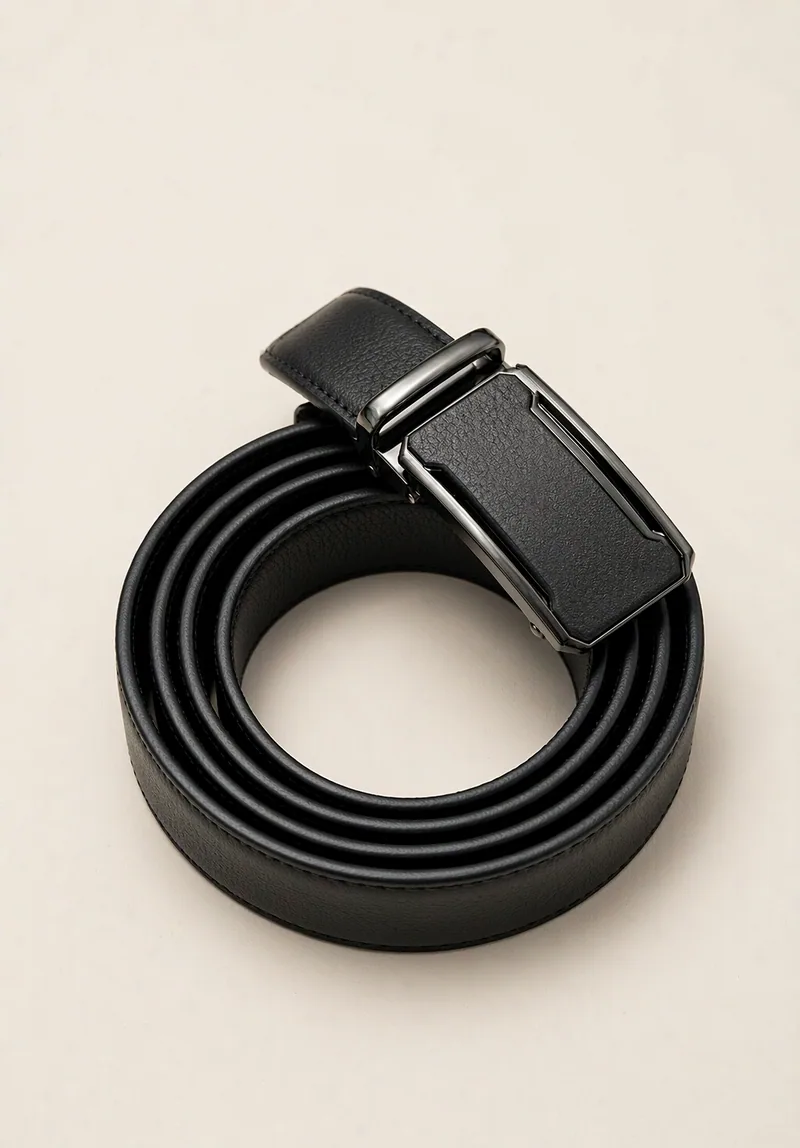
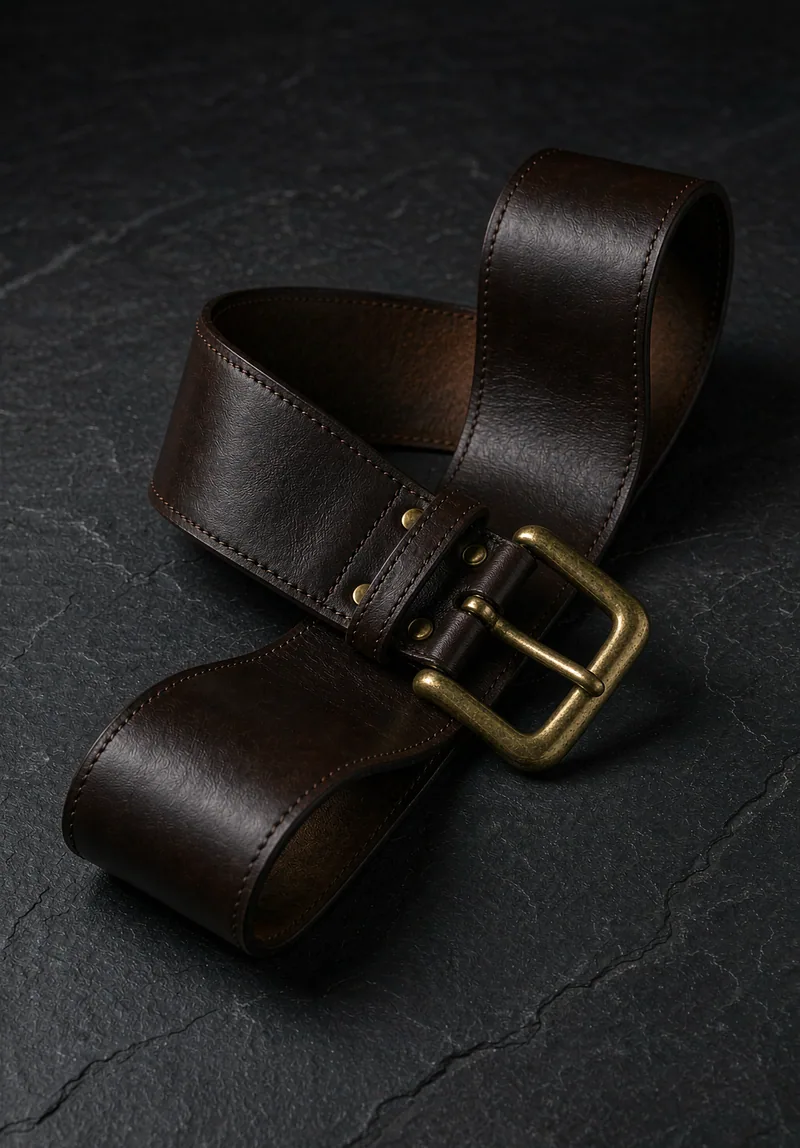
The short answer: your belt size is not your trouser size. Measure a belt you already wear from where the leather meets the buckle to the hole you actually use — that distance is your belt size. If you are buying your first well-made belt, take your trouser waist and add about 5 cm (2 in).
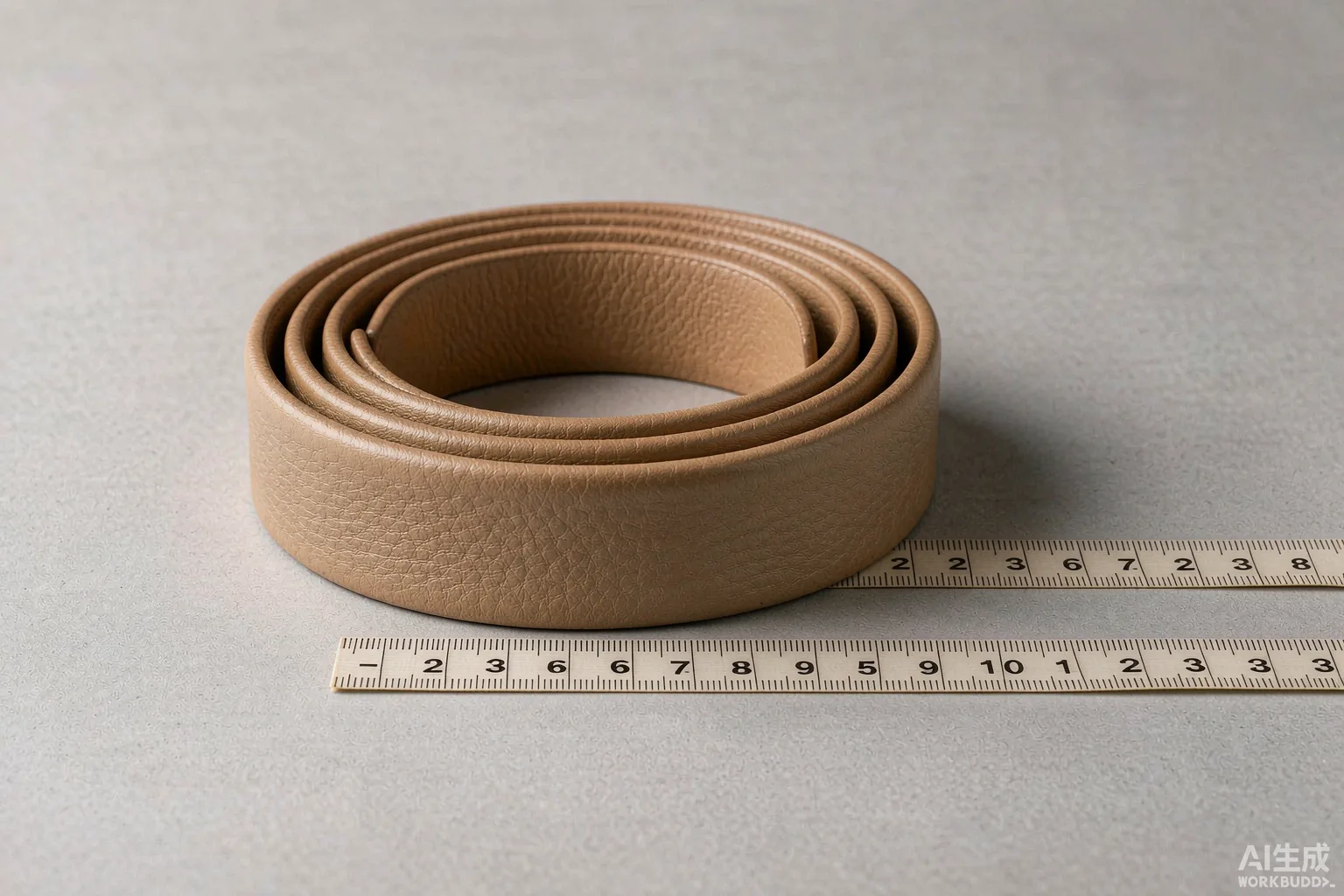
It sounds like a small detail, but getting it wrong is the single most common reason a belt gets returned. A belt that is too short leaves you on the last hole with no room to adjust after a heavy lunch; one that is too long wraps past the first keeper and looks like a tail. Neither is fixable after the leather is cut.
Why belt size and trouser size are not the same number
Trouser sizes measure your body. Belt sizes measure a product that has to wrap around your body plus the trousers underneath it, and then still have enough length left over to thread through the buckle and the keeper loop.
That is why the two numbers diverge:
- Trousers sit at the waist; a belt sits outside them. A pair of trousers adds roughly 1–2 cm of fabric and waistband to the circumference you are wrapping.
- Waistline height changes the measurement. Measured at the natural waist versus down on the hips, the same person can differ by several centimetres. Belts worn low on the hips need to be larger, not smaller.
- Vanity sizing is inconsistent. A "32" in one brand is a 34 in another. Trouser labels are not a reliable input.
The practical consequence: never order a belt in your trouser size alone. Measure, or convert deliberately.
Method 1: measure a belt you already own (most reliable)
If you have any belt that fits well, this method beats every other one, because it already accounts for your body, your trousers and where you like to wear it.
- Lay the belt flat on a table, buckle at one end.
- Find the hole you actually use — not the middle hole, not the tip.
- Measure from the point where the leather meets the buckle (the fold over the metal bar) to the centre of that hole.
- That number, in centimetres or inches, is your belt size.
Method 2: measure your body (when you have no belt to copy)
Use a soft dressmaker's tape. Stand normally — do not suck in.
- Wrap the tape at the height where you actually wear a belt, over the trousers you wear most often.
- Read the number. That is your wrapped circumference.
- Add 5 cm (about 2 in) to get your belt size.
Why add 5 cm? Two centimetres goes to the trouser fabric under the strap, and three centimetres gives you the length needed to pass through the buckle and sit in the keeper with a sensible tail.
Belt size conversion chart
Use this when you know your trouser waist. Belt size is given as the measurement from buckle to the hole.
| Trouser waist (in) | Belt size (in) | Belt size (cm) |
|---|---|---|
| 28 | 30 | 75 |
| 30 | 32 | 80 |
| 32 | 34 | 85 |
| 34 | 36 | 90 |
| 36 | 38 | 95 |
| 38 | 40 | 100 |
| 40 | 42 | 105 |
When you are between two sizes, take the larger one. Leather can always take another hole; it can never be made longer.
Choosing the right belt width
Width is the second decision, and it is about proportion and occasion rather than fit.
- 25–30 mm: formal and tailored. Sits discreetly under a jacket, works with suit trousers.
- 32–35 mm: the everyday middle ground. This is what most people should own first — it works with chinos, denim and smart-casual trousers.
- 38–45 mm: casual and utility. Reads as deliberate with heavy denim or workwear.
The rule of thumb: match the belt width to the weight of the trouser and the size of the belt loops. A 25 mm strap in a wide workwear loop looks lost; a 45 mm strap forced through a suit loop will not sit flat.
Why thickness matters on a leather belt
A belt is a tension product. Unlike a bag, which hangs, a belt is pulled tight every single day, and the stress concentrates at one point: the hole the pin sits in.
Thin, corrected-grain straps stretch at that point. The hole elongates, the finish cracks around it, and within a season the belt will not hold the setting you chose. Dense full-grain leather at 4 mm and thicker resists this because the fibre structure is intact all the way through — it is the same reason vegetable-tanned hides are preferred for belts over softer chrome-tanned ones.
Frequently asked questions
Should a belt be two inches bigger than your waist?
Yes, as a rule of thumb. Take your trouser waist and add roughly two inches (about 5 cm). That accounts for the trouser fabric underneath and gives enough length to thread the buckle and keeper.
What size belt should I buy if I am between sizes?
Choose the larger size. An extra hole can be added cleanly to a leather belt, but a strap that is too short cannot be lengthened. Aim to wear the belt on its middle hole, with spare holes on either side.
How tight should a leather belt be?
Tight enough to stay put without digging in. You should be able to slide one flat hand between the strap and your shirt. If you need to pull to the last hole to get support, the belt is too long, not too loose.
Do leather belts stretch over time?
All leather relaxes slightly with wear, but the amount depends on the cut. Full-grain leather from the top of the hide stretches very little and recovers; split or bonded leather stretches permanently, especially around the holes. This is why the material matters more than the brand on a belt.
How do I know if a belt will fit my buckle?
Most quality belts are sized by strap length with the buckle included. If you are replacing a strap on an existing buckle, measure just the leather from the buckle fold to the hole you use, and order that length.