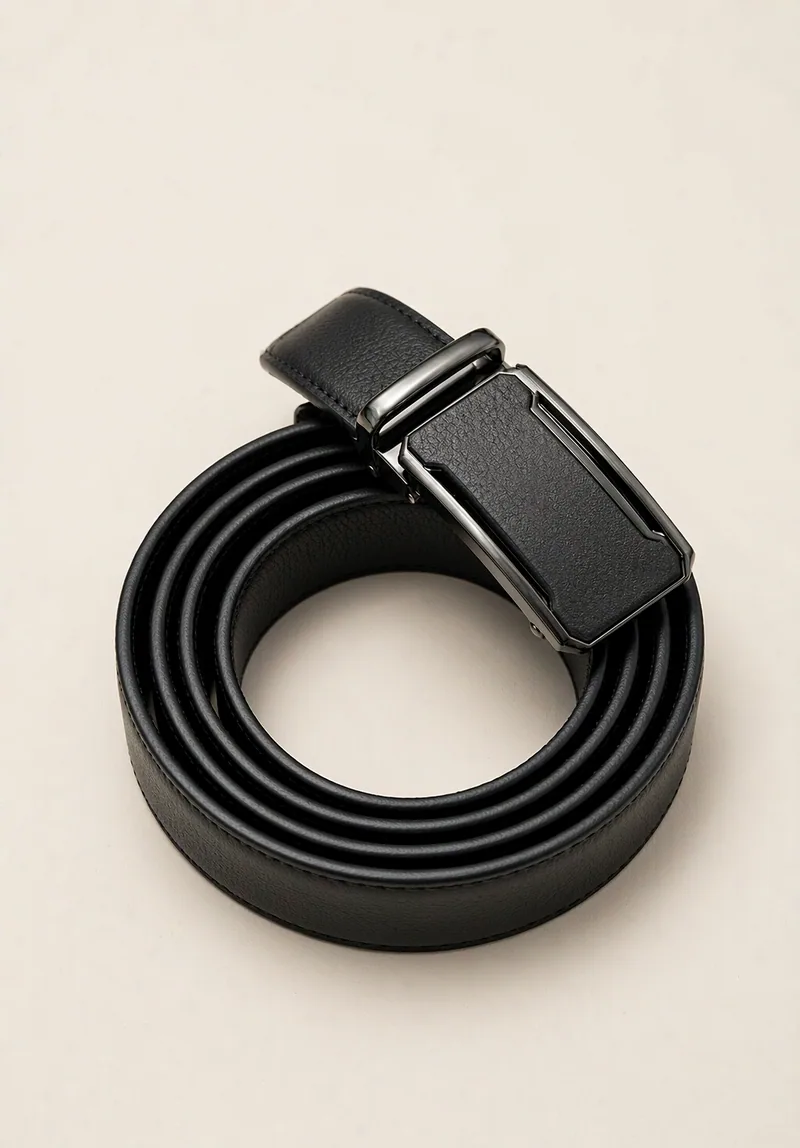
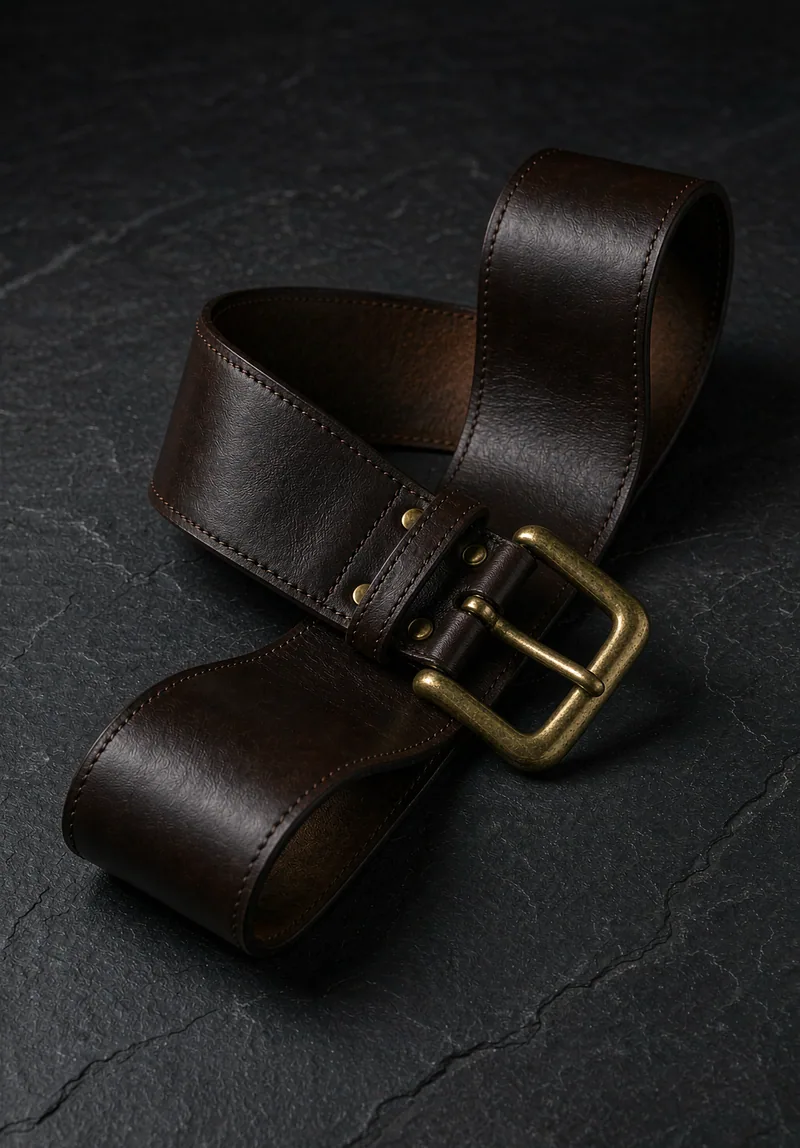
Full-grain leather is the top layer of a hide, used exactly as the animal grew it — not sanded, not corrected, not embossed. Because a hide's densest fibres sit at the surface, it is the strongest leather available, and the only grade that improves with age rather than simply wearing out.
"Full-grain" is a term printed on a great many labels, usually without explanation. Here is what it actually commits a maker to, and why we cut and finish our leather the way we do.
What "full grain" actually means
A hide is not uniform. It has a grain side — the outside, which carried the hair and the pores — and a flesh side underneath. Tanneries can split a hide into several layers, and the deeper layers are weaker because their fibre structure is looser.
Full grain means the top layer has been left intact. Nothing has been sanded off it, and no finish has been embossed onto it to imitate a surface that is not there. What you see is the animal's own grain: pores, fine creases, the occasional mark.
That last point is the part that surprises people. On a corrected hide, a scar or an insect bite is sanded away and the surface is re-stamped with an artificial grain. The result is uniform and flawless-looking, and it is also weaker, because the sanding removed the densest part of the leather to achieve it.
Why we cut it thick
A belt lives under tension every single day. It is not a decorative object; it is a structural one, and the stress concentrates at one point — the hole the buckle pin sits in.
We keep the top layer of the hide and cut belts at 4 mm and thicker. Density, not thickness alone, is what holds a belt together for a decade: thin leather of any grade will elongate at the holes, and once a hole has stretched it will not recover.
Why we finish it by hand rather than cover it up
Lower grades are corrected — sanded, painted, embossed to look uniform. Full grain we leave honest. The small marks and tonal shifts are the hide, not defects, and covering them would mean throwing away the strongest part of the material to hide a cosmetic detail.
Each piece is cut and finished by a single artisan across 47 steps rather than moving down a line. This is not romanticism: the person who selects the hide is the person who will see how it behaves at the bench, and that feedback loop is what keeps quality consistent in a material that varies from one hide to the next.
Patina: what actually happens over time
Full-grain leather absorbs the oils from your hands and the light from your days. Over months it darkens, then softens, then develops a sheen in the places that get handled most — the fold near the buckle, the edge of a strap, the panel you rest your palm on.
That is the point of the material. A piece you break in ends up looking like it belongs to you, while a piece that looked identical on day one and still looks identical in five years has merely not aged.
How quickly patina develops depends mostly on the tannage. Vegetable-tanned leather darkens noticeably and fairly quickly; chrome-tanned leather is more colour-stable and will stay closer to its original shade.
Caring for untreated full-grain leather
- Condition twice a year, in spring and autumn, with a conditioner made for leather. Untreated full grain absorbs it readily — apply thinly and buff off the excess.
- Wipe it down with a barely damp cloth when it looks dull. Avoid household cleaners entirely: they strip the oils the leather depends on.
- If it gets wet, dry it slowly. Blot, then leave it at room temperature, away from radiators and direct sun. Fast heat is what cracks leather, not water.
- Expect the first scuff to bother you and the tenth not to. Light marks on full grain usually rub out with a thumb and disappear into the patina.
Frequently asked questions
Is full-grain leather the same as top-grain?
No. Top grain is also the upper layer, but it has been sanded to remove marks and then finished. It is more uniform and softer from new, and slightly less durable, because the sanding removes the densest fibres. Full grain is unsanded.
Why does full-grain leather cost more?
Primarily the raw material. A maker using full grain cannot hide a flaw behind a coating, so a larger share of each hide is unusable — and unusable hide is still paid for. The cost sits in the material and the waste, not in the name.
Does full-grain leather scratch easily?
It marks, yes — a fingernail will leave a line on an untreated surface. Most light marks buff out with warmth from your thumb, and the rest disappear into the patina within weeks. A coated leather resists marking better and then, once the coating is breached, cannot be restored at all.
How long does full-grain leather last?
Decades in normal use, and longer with occasional conditioning. Because the surface is the material itself rather than an applied layer, there is nothing to peel or flake — it wears, thins slightly and darkens, and can be reconditioned along the way.
For the wider picture on how leather is graded and labelled, read our guide to leather grades, or the comparison of vegetable-tanned and chrome-tanned leather.